
Recent reading (mid 2026), part 1
Fiction

I am back with some quick notes about what I’ve been reading. Summer travel makes reading incomprehensibly harder, so the last month has been slow, but I’m otherwise on track to read 50 books this year. To ease my return to writing, this one was written in one shot and not proofread.1 What follows are the books of fiction I’ve read in 2026 so far.
The Big Ones
In my quest to fill some gaps in the classics, I’m pleased to report that I not only read but adored Herman Melville’s Moby-Dick or, The Whale, and Homer’s Odyssey (Emily Wilson’s translation). Both deserve their own posts, and I probably will get to writing something about Moby-Dick eventually, but let me just say these cannot be overrated. I don’t know why it took me so many years to finally get to them, but here I am.
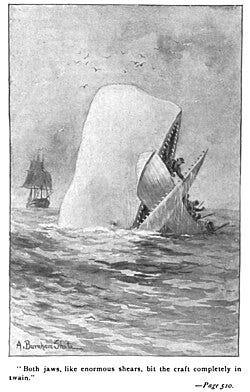
I understand Cormac McCarthy better now that I’ve read Moby-Dick. This was famously his favorite novel, and legend has it he read it every year. I topped it with Billy Budd and the Piazza Tales, which includes absolute gems (“Benito Cereno” and the very Darwinian “The Encantadas” in particular, the latter of which should delight McCarthy fans).
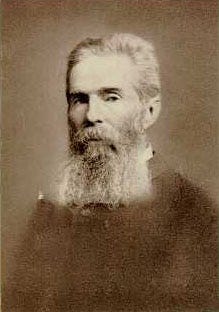
I also understand my father better now. Coincidentally, this was also his favorite book. I don’t know how many different editions we had at home, too many if you ask my mother, but I vividly remember Melville’s famous late-life, bearded photograph standing on a shelf and asking what member of our family this person was. My father wanted to be a sailor and fisherman, but failed the vision tests (he was color-blind). He became a doctor instead and found proxies for his dream in literature, explorers’ tales, and bottled ships. I’ve never really loved the ocean. I don’t mind it and find it fascinating, but I feel more at ease in the mountains. However, I think I now understand my father’s dream better after reading Moby-Dick. And of course, I understand why he adored the book. (I can recommend Nathaniel Philbrick’s Why Read Moby-Dick?; it might make you read it or strengthen your appreciation for it, though it really is a little book.)
Both Moby-Dick and The Odyssey are sea voyages of literally epic proportions. Odysseus’s late revenge against the suitors doesn’t match Ahab’s obsessive, vengeful hunt for the white whale, but the gods (Athena, Poseidon, Helios, Zeus) exert vengeance repeatedly, and so do the suitors’ families at the end. Both show that meaning resides in things greater than ourselves, but so do danger and our inevitable destruction.
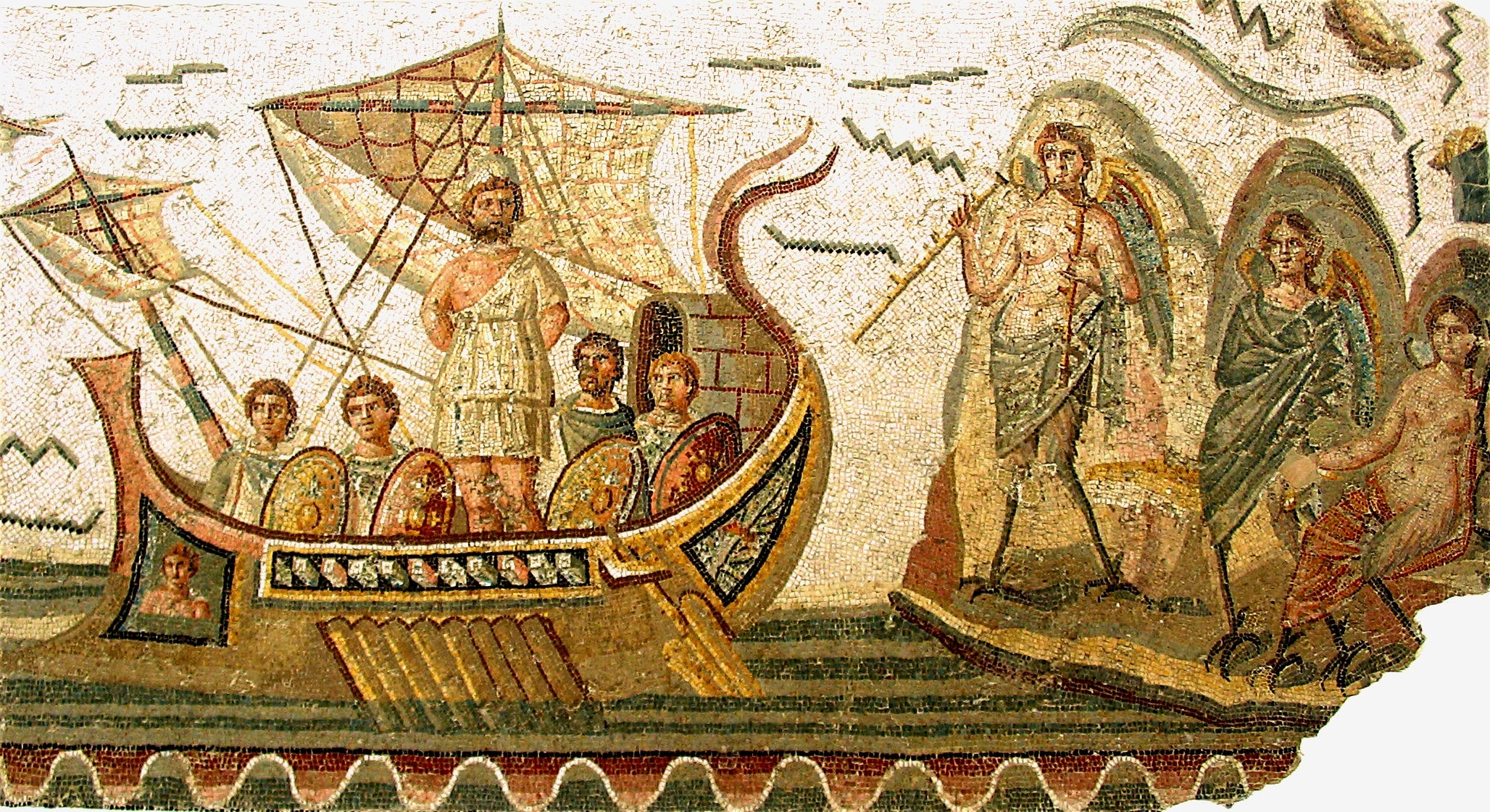
Some striking things about The Odyssey:
It is full of crying and wailing—they’re not exactly wimps, obviously, so tears must have meant something profoundly different in Homeric times.
Lots of people die. And that’s on top of the Trojan war, which The Iliad is about. Lots of those deaths are unnecessary, too. And yet you wouldn’t say life was cheap, because Odysseus and his men seem deeply affected by the loss of their comrades.
It’s always funny when people make up stuff like romantic marriage and loving fathers are a recent invention. It’s cliché, but the poem reveals the near-universality of not just themes and tropes but also human attachments.
I must have already read the Argos scene (or heard it so many times), and yet it was still immensely moving. Perhaps one of the most heartwrenching scenes of the whole poem. Yes, it’s about a dog, and I say that as a cat person.
By the way, more animals than I would have expected, most of which have an important dramatic or symbolic role (as omens, notably). They eat some of them, but others you clearly shouldn’t mess with (e.g., Helios’ cattle).
Sex—never explicitly stated but heavily implied. Likewise, lots of it, plus some highly erotic content (oiling, nymphs playing ball, frequent nudity).
I have nothing to compare Wilson’s translation to, but I found it highly readable and poetic. Her introduction and her notes are exceptionally helpful. I don’t understand the criticisms, and I honestly don’t care. Any translation is probably fine, and this one looked excellent to my uninformed eye. Your mileage may vary.
Of course, I also saw the movie—just yesterday, in fact—and enjoyed it. It’s not a great movie, but it’s spectacular, the actors are overall excellent, and the interpretation, as unfaithful as it is, is much less shallow than the pesky reviews and discourse pieces would make you think. Speaking of, yes, I did read Wilson’s LRB review and found it lacking in grace. There’s clearly something going on between Nolan and her that I’m missing, because there’s no way this movie deserves this mean of a review. Again, your mileage may vary.
Related podcasts
“The Lotus Eaters”: Very Bad Wizards (David Pizarro and Tamler Sommers) mini-series on The Odyssey (for Patreon supporters; honestly a good reason to subscribe if you’re reading it).
I’ve tried a few podcasts about Moby-Dick and haven't found one that really suits me. This new one, The Pequod Pod with Jonny Wiles, Meg Fancher, and Tristan Bavol-Marques, has been pretty good so far.
Other fiction
Ernest Hemingway, In Our Time
One of Hemingway’s early collections of short stories, which nonetheless contains some of his best writing. Remarkable. The so-called “iceberg theory” sounds suspicious, but it really works wonders here.
Yuri Herrera, Kingdom Cons and The Transmigration of Bodies
I had read Signs Preceding the End of the World and Season of the Swamp by this Mexican author that I’ve heard compared to McCarthy.
These two are excellent too, very short, and impossible to do justice to here. Of the four, Signs may be the weirdest and most difficult, but the mood is consistently unique. They’re all translated from Spanish by Lisa Dillman, who seems to be doing a fantastic job.
Michel Houellebecq, Soumission
Is it controversial? Yes. Is it a very good book? Yes. Is it Islamophobic? I don’t think so; in fact, I find it surprisingly full of grace towards Islam and Muslims, given what Houellebecq has said about both. Do we hear too much about the narrator’s sex life and genitals? Absolutely.
Alan Moore, Watchmen
I am not in comic books, let alone superheroes. But based on a few colleagues’ recommendations, I gave it a try. I liked it more than I expected, especially the visual craft. The narrative is okay, the dialogue overall pretty bad (but some of the interludes are pretty good), the ideas are meh. Will I read more Alan Moore? Not in the near future. Am I glad I read it? Sure!
Vladimir Nabokov, Lolita
One of the most uncomfortable works of genius I have encountered. First of all, what a writer! And the humor. But also, how tactfully does Nabokov bring the reader to the edge of adopting the wrong perspective, drawing the wrong interpretation, succumbing to the narrator’s tricks and deception! Most importantly, given the subject, no moralizing or didacticism whatsoever.
W. G. Sebald, Austerlitz
A doozie. Gorgeous prose (translated from German by Anthea Bell), artfully embedded narration, and some extremely insightful reflections on places, architecture, and memory.
Robert Seehaler, The Last Movement
A fine (but too short to be excellent) fictionalized account of Mahler at the end of his life. Mahler comes across as difficult but vulnerable, a genius but humane. Translated from German by Charlotte Collins.
Jeff VanderMeer, The Southern Reach Series (Annihilation, Authority, Acceptance)
I initially thought this was a trilogy. But then, when at last I finished the third book, I realized there was a (more recent) fourth volume (Absolution). I guess I’ll have to read, despite not loving the ones I read. It’s clearly top-tier science fiction, but I find Vandermeer a bit too self-indulgent and undisciplined with his prose and the characters insufficiently authentic. Fans disagree, but I found Authority and Acceptance to be too long for what they had to offer. Hence my apprehension when it comes to a fourth, even longer volume.
Still, the atmosphere of Area X, the abandoned coastal wilderness off the Florida coast (inspired by St. Marks NWR near Tallahassee), is mysterious and sublime enough to warrant reading.
Andy Weir, Project Hail Mary
We wanted to see the movie, so I picked up the book; it had been on my shelf for years. It’s lots of fun, and I enjoyed the nerdy science stuff. Weir wants to make the universe coherent and show you he understands engineering. He’s a better narrative engineer than a writer, but given my sparse sci-fi consumption, I found it decent. The movie was good too, but not great, and inferior to the novel (props to Ryan Gosling and Rocky, though).
In progress
Zora Neale Hurston, And Their Eyes Were Watching God
Tender, raw, ingenious, and daring, but I’ll be honest, the dialect slows the reading down a lot.
Rachel Kushner, The Flamethrowers
So far so good. Good writing, fun characters.
This post may be edited for typos without notice.
Lots of great books. I was also very taken by Austerlitz. I haven't read The Last Movement, but I read The Tobacconist a few years ago and I really enjoyed that one.