
2025 reading

Here’s my reading wrap-up of 2025. Tomorrow, music.
At the time of writing, I have read 54 books in 2025. Since I tend to be quite picky when choosing books, I rated many of the ones I read this year very highly. Selecting the best ones was impossible, so I decided to simply recommend some of my reading, broken down into thematic categories. So it goes.
Cormac McCarthy
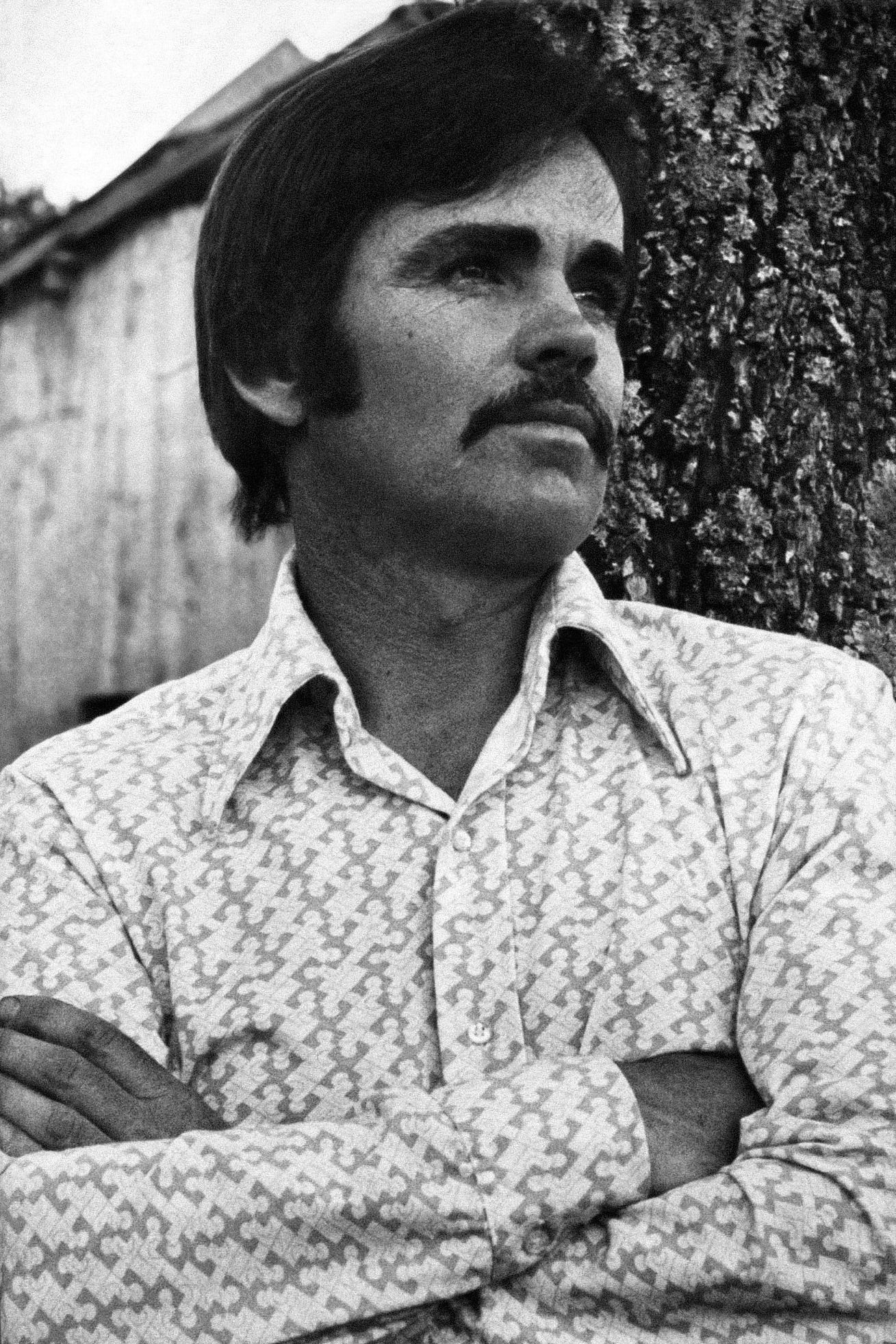
Over the last couple of years, I have virtually completed Cormac McCarthy’s published corpus (twelve novels, two plays, two screenplays, and one nonfiction essay). The bulk of it (twelve books) I read this year, including two I had read about fifteen years ago—The Road and Blood Meridian. I’d still like to read his early short stories and the unproduced screenplay, Whales and Men. And then re-read. I recommend almost everything I read this year, but especially:
Suttree
Outer Dark
The Passenger
The Sunset Limited
and of course, Blood Meridian and The Road
Part of my motivation was that, based on just the two novels I had read initially (The Road and Blood Meridian), McCarthy was already among my favorite writers. Then he died in 2023, so I read No Country for Old Men and then the Border Trilogy and was hooked. Last year, I took on a student who wanted to do an independent study on McCarthy. We’re now working on his Bachelor’s Essay (honors thesis). In addition to reading the man himself, I discovered a vast secondary literature and listened to the entire catalog of the wonderful podcast Reading McCarthy, hosted by Scott Yarbrough. I discussed some of my love for McCarthy in a previous post:

War
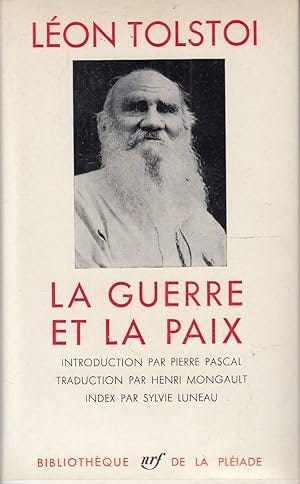
The big goal of 2025 was Tolstoy’s War and Peace (La guerre et la paix), and while it is indeed very long, it did not disappoint. I read it in French, which makes you forget how much of the dialogue is spoken in French, not Russian, in the novel. My cliché review when I was practically done was:
90% into War and Peace. It is very, very long but also: so sad, so terrifying, so funny, so beautiful, it’s the whole world and all of life, it touches everything that matters: life and death, love and suffering, friendship, music, animals, childhood, ideals and delusion, free will and history. We are so blessed to have it. And it took me 42 years to read it.
Curiously, I didn’t love all of it; some parts felt like a slug, and I set it aside several times for weeks at a time. And yet, it really is one of the greatest books.
Because I’m big on upbeat reads, I decided to read more war novels. These included two other classics, Hemingway’s A Farewell to Arms and Vonnegut’s Slaughterhouse-Five. The former, taking place on the Italian front during the Great War, I found beautiful (even read just after The Sun Also Rises, which is not not about the war), the latter, mixing time travel (or PTSD) and the bombing of Dresden during WWII, is both extremely funny and surprisingly profound. On war, I also read a recently unearthed novel of Céline’s, Guerre, the rawness of which isn’t simply due to the unpolished nature of the manuscript, and makes me want to re-read Voyage au bout de la nuit (Journey to the End of the Night).
While it is not primarily about war, war is certainly central to McCarthy’s magnum opus, Blood Meridian, which I re-read and will read again and again. Also, the Manhattan Project lingers in the background of The Passenger, while The Road assumes a Hobbesian war of all against all.
More Classics
Some of my least favorite books of the year were, accidentally, by women. Thankfully, though, some of the great classics I read were also by women (they don’t have much else in common):
Flannery O’Connor, A Good Man is Hard to Find and Other Stories
Southern Gothic, probably an influence on McCarthy. A lot of Catholic symbolism, much grotesque, some violence, very funny.
Mary Shelley, Frankenstein
Very romantic, but I loved it, in no small part for the time spent in the Alps, including Chamonix
Of course, you can’t help but think about AI
Kate Chopin, The Awakening
Not one I was familiar with until recently, although I've heard it’s a standard high school reading. Astute and daring.
Jane Austen, Persuasion
So sharp.
I wrote about the value of reading classics:
Mexico
Partly owing to McCarthy, I’ve become aware of and embarrassed by how little I know about the rich and complicated history and culture across the border. My remediation involved an accessible and opinionated introduction to Mexican philosophy by Carlos Alberto Sánchez, Blooming in the Ruins: How Mexican Philosophy Can Guide Us Toward the Good Life. While it felt a bit too much like public philosophy for my taste, it does a good job covering a range of topics and makes you want to read the Mexican philosophers, which is what matters. (Dr. Sánchez will be visiting us this spring, I’m excited.) I also read the classic (but to me very difficult) Pedro Páramo by Juan Rulfo (on Robin McKenna’s recommendation), and two short novels by Yuri Herrera, Signs Preceding the End of the World and Season of the Swamp. Signs is probably a little masterpiece, a timely one, albeit dreamy and cryptic, and it warrants re-reading, like Pedro Páramo. I’m very glad I discovered this author, though I wish he wrote longer books.
Nature writing and animals
I’m a sucker for nature writing done well. Because we read excerpts of Annie Dillard’s Pilgrim at Tinker Creek in my Environmental Ethics class, and she’s been mentioned as an influence on McCarthy, I picked up Teaching a Stone to Talk: Expeditions and Encounters and started For the Time Being (short but slow reading—it’s about geological timescales, so that’s fine). And because my family was fortunate to spend two weeks in Yellowstone and Grand Teton National Parks, I enjoyed Tim Cahill’s Lost in My Own Backyard.
On animals specifically, I liked Katherine Rundell’s Vanishing Treasures: A Bestiary of Extraordinary Endangered Creatures (wonderful until the tiny bit of hackneyed moralizing at the end) and Joe Shute’s Stowaway: The Disreputable Exploits of the Rat, which was very helpful for a paper I worked on this year (more on this in the near future).
On the philosophical side, I will also recommend:
Susana Monsó, Playing Possum: How Animals Understand Death
No one else does what Susana does, and she does it well
Jeff Sebo, The Moral Circle: Who Matters, What Matters, and Why
reviewed here by yours truly
some further reflections here:
Dale Jamieson, Ethics and the Environment: An Introduction
my favorite philosopher and mentor
reviewed here by yours truly
Peter Godfrey-Smith, Living on Earth: Forests, Corals, Consciousness, and the Making of the World
my second favorite philosopher, the last volume of his mind-blowing trilogy after Other Minds and Metazoa. The latter is still my favorite of the three, but I really enjoyed this one, including some sensible reflections on wild animal suffering.
Mark Rowlands, The Word of Dog: What Our Canine Companions Can Teach Us About Living a Good Life
Rowlands’s trade books are criminally underrated. I loved Running with the Pack and The Philosopher and the Wolf. Even though I’m a cat person, this one hit all the right spots and is, like the previous ones, surprisingly profound.
François Jaquet, Le pire des maux: Éthique et ontologie du spécisme
commentary forthcoming by yours truly

Other recommended nonfiction
Dean Spears and Michael Geruso, After the Spike: Population, Progress, and the Case for People
extremely compelling case against population decline
James C. Scott, In Praise of Floods: The Untamed River and the Life It Brings
published posthumously; I’m a huge fan of Scott’s, I found this one fascinating and moving, and wish he’d had more time to polish it
Samuel Scheffler, One Life to Lead: The Mysteries of Time and the Goods of Attachment
huge fan of Scheffler’s as well; one of the best living moral philosophers
Stephen Macedo and Frances Lee, In Covid’s Wake: How Our Politics Failed Us
the best treatment I’ve read of the disgrace that was the mainstream pandemic response; glad it’s being well received, the Overton window has opened
David Reich, Who We Are and How We Got Here: Ancient DNA and the New Science of the Human Past
Cameron J. Buckner, From Deep Learning to Rational Machines: What the History of Philosophy Can Teach Us about the Future of Artificial Intelligence
Ethan Mollick, Co-Intelligence: Living With and Working With AI
Atul Gawande, Being Mortal: Medicine and What Matters in the End
***
I also read some middling books that I won’t list, but here are a few I strongly recommend not wasting your time and money on:
Eliezer Yudkowsky and Nate Soares, If Anyone Builds It, Everyone Dies: Why Superhuman AI Would Kill Us All
Melanie Challenger, How to Be Animal: A New History of What It Means to Be Human
So cool that you read so much McCarthy! I love going through someone's catalog like that, though it feels like ages since I've done it.
Also, I can't help but be intrigued by your anti-recommended list...